
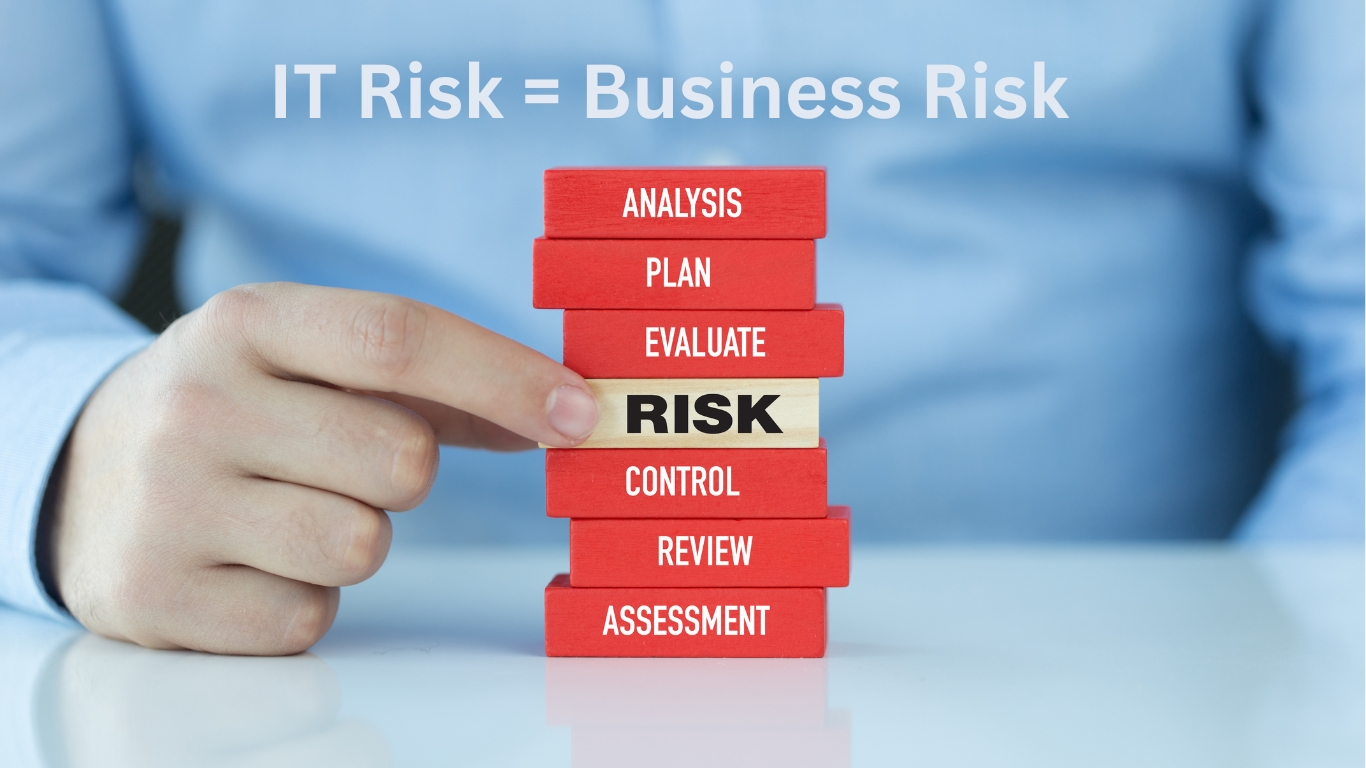
Cyber Risk, Business Strategy, Governance
Every cyber incident carries operational, financial, and reputational consequences. Consider these scenarios:
These outcomes affect the organisation beyond IT—they threaten revenue, strategic objectives, and long-term viability. Business leaders must therefore evaluate cyber risk in the context of enterprise objectives, not just system security.
Aligning cybersecurity with enterprise risk
Cyber risk management should mirror other business risks such as financial, operational, or compliance risk. This means:
1. Risk Assessment: Identify which assets, processes, and data are critical to business continuity.
2. Impact Analysis: Quantify potential financial, operational, and reputational consequences of a breach.
3. Integration: Include cybersecurity in enterprise risk frameworks, reporting to the board and executive teams.
By translating technical vulnerabilities into business impact, executives can make informed decisions on investment, insurance, and strategic priorities.
Operational resilience starts with leadership
Treating cybersecurity as a business responsibility ensures accountability at all levels. IT teams cannot manage risk alone; leadership must set the tone, allocate resources, and prioritise initiatives that align with business goals.
Key elements of business-aligned cybersecurity include:
1. Cross-functional governance: Security decisions involve legal, compliance, operations, and finance teams.
2. Board-level reporting: Executives receive risk insights in business terms, not technical jargon.
3. Incident readiness planning: Scenarios are tested with clear operational impact, not just technical fixes.
When business leaders understand the stakes, security decisions become strategic rather than reactive.
The cost of ignoring cybersecurity as a business risk
Ignoring the business impact of cyber threats leads to:
1. False confidence in technical controls
2. Unpreparedness for high-impact incidents
3. Delayed response, increasing financial and reputational damage
4. Difficulty in meeting regulatory and contractual obligations
Organisations that treat cybersecurity purely as IT risk are often blindsided when incidents escalate beyond technical containment.
Moving from IT-focused security to enterprise risk management
The transition requires mindset, process, and culture changes:
1. Shift from prevention-only to detection and response: Technical controls alone are insufficient.
2. Invest in awareness and resilience: Employees, third parties, and leadership must understand their role.
3. Measure security in business terms: Use metrics like potential financial impact, time to detect, and operational downtime.
By embedding cybersecurity into enterprise risk management, organisations can anticipate, mitigate, and respond to threats proactively.
Conclusion
Cybersecurity is no longer just an IT concern. It is a business risk that affects revenue, reputation, compliance, and long-term viability. Organisations that recognise this reality are better equipped to prioritise investments, improve resilience, and make informed strategic decisions.
When cybersecurity becomes a shared responsibility across IT, operations, and leadership, organisations move from reactive firefighting to proactive risk management.
If your organisation is still treating cybersecurity as an IT-only issue, our experts can help you integrate it into your enterprise risk strategy, ensuring measurable protection, resilience, and confidence. Stay ahead of evolving threats. Contact our team of cybersecurity experts today to learn how we can help you implement the latest security technologies and protect your business in 2025 and beyond. Stay ahead of evolving threats. Contact our team of cybersecurity experts today to learn how we can help